
Interviewed by Jason Gordy Walker
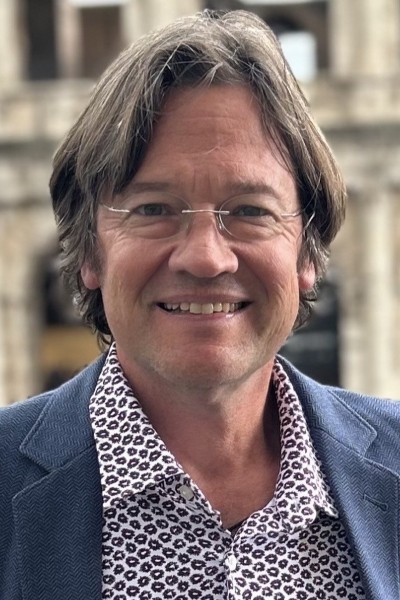
Jim Murphy is the author of four poetry collections: Versions of May, The Uniform House, Heaven Overland, and The Memphis Sun. His poems and scholarship have appeared in journals including Brooklyn Review, Gulf Coast, MELUS, Mississippi Review, Modern Fiction Studies, Puerto del Sol, The Southern Review, Texas Review, and TriQuarterly. He teaches at the University of Montevallo and lives with his family in Homewood, Alabama.
Jim and I corresponded via email during January and early February in 2026.
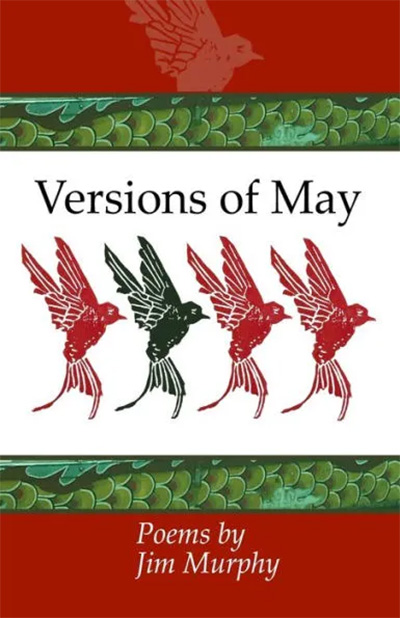
Jason Gordy Walker: Versions of May often pairs the joy of daily life with melancholic reminiscence. With couplets, tercets, sestets, thirteen-liners, sequence poems, and other forms, it is both various and cohesive. Can you describe your general process for creating such poems?
Jim Murphy: This book was written in the wake of great losses for me personally—both of my parents, my first marriage, the kind of ego you have when you’re climbing the career ladder, things like that. What seemed like stable guideposts were suddenly completely gone, and that’s terrifying when you have a lot invested in images and ideas of who you are according to how other people might see you. “I’m these people’s son. I’m this person’s spouse. I’m Dr. So-and-So.” Yes, you are. But you’re also a lot more, something much larger than all that, and I had to strip away a lot of limiting illusions to reach that realization. And it was really hard, really painful, and it sure as hell wasn’t on purpose. But it had to happen, and I’d guess it has to happen for us all. “Descend that you may ascend” is how Augustine put it.
Anyway, coming out of that, once my frames of reference had changed and I started to see things in new ways, these poems started to arrive. I say “arrive” because I wasn’t chasing after them anymore. I was more open to what the world gives you. And eventually it gave me space and time, a beautiful new wife, family, and home life. So brighter and greener poems also started to arrive. You’re absolutely right that they’re a combination of quiet joys and melancholy memories. They all came slowly, suggesting themselves in the various forms you mentioned. Many of the darker ones are the thirteeners, one line short of a sonnet, just to be contrary about it. They’re a concentration of language and some very intense experiences, so that shape seemed to fit. Some of the more open forms involve long-distance travel, or extended periods of remembered time, so it makes sense they’d meander a bit. Scope and scale suggest themselves to me according to the subject matter, but I’ve always enjoyed some repeating elements—rhythms, motifs, stanzas and lines of particular sizes—to keep things tight. I think this is the “various and cohesive” element you’ve picked up on. That’s a good way to put it. When I pulled them all together, I didn’t know what I had, exactly. Sue Brannan Walker at Negative Capability Press did, though. She’s always been a great supporter of my work, and I’m so grateful she published the book. It turned out beautifully in every way. Sue is one of the main champions of poetry in this state. We have a lot to thank her for.
Walker: “Fled is That Music” is deceptively simple in language and haunting in its duty to the memory of your late mother. What challenges did you face working through this emotionally resonant poem?
Murphy: You’re getting right to the center of things with that one, Jason. It’s the most concentrated one of them all. But I don’t know if there’s any way to contain what goes through your mind and soul sitting with a loved one on their last day. It really did feel like moving in the consciousness of an Emily Dickinson poem, or a poem by John Keats. That’s where the title comes from. At the end of “Ode to a Nightingale,” Keats writes “Was it a vision, or a waking dream? / Fled is that music—Do I wake or sleep?” He’s ostensibly baffled by the nature of the bird song there—is it external or internal? Where is it? Where is my mind? That sort of thing. But with Keats there’s also a struggle to reach a compromise with time, a deal with mortality, you know? He figures if it can be made, it gets made in art, conditionally. I didn’t have Keats in mind when I sat with my mother. But I did have The Beatles in mind, and I did have them on this little speaker she had. She bought me a copy of Sgt. Pepper when I was eight years old, and everything I know and love about art flowed from that. So, I went back and played them for her, for us, one more time. God that was hard. The narrative parts of the poem with her not speaking or eating for days are all true. It was to a point where she couldn’t respond. But we listened to that music, and I spoke with her, imagined what she’d say and responded to that. And then in the middle of the night, she died in silence. Or did she? The last chord of that album goes on, you know, like Keats’ nightingale song. So, this otherworldly thing about the music took on a new shape, and years later I was able to write that poem. Just barely.
Walker: These poems often reference musicians and singers: Miles Davis, Jim Morrison, The Beatles, Chet Baker, Nina Simone, Paul Westerberg, and others. What role does music play in your process? Do you ever listen to it while writing?
Murphy: It’s funny to have a list of those musicians to consider, the ones from my poems, who are also ones from my past. I can very clearly place each one along this path of development. The Beatles are first, like I was saying. Then you get to middle school and here come The Doors to lead you into all kinds of weird and scary places for a seventh grader. Paul Westerberg of The Replacements is in there because it’s the Midwest in the 1980s, and you’re a junior in high school recognizing older brother figures who are on the same kind of cool journey or whatever. Then, of course, you get super sophisticated in college and grad school and Miles Davis, Chet Baker, and Nina Simone come into the mix—the jazz players. It’s really funny. But meaningful, too. And I had to settle accounts with some of the ones who reached me early on, especially Jim Morrison. That poem “Phone Call to Morrison” is about trying to do just that, give him a call and ask what the hell he was really trying to do, because he made some both profound and stupid statements about that, and the same thing goes with his lyrics. I actually wanted an answer now that it was years later and I’d outlived him somehow and was twice his age when he died. Of course, that’s a long-distance call. He didn’t pick up.
Anyway, you were asking about process and whether I listen while writing. I think some valuable lessons about the music of American poetry came to me through those jazz players, Miles Davis especially. The timing. The space. I’m purely a fan and not a player, so I don’t have the vocabulary to explain in a technical way what’s going on, but it’s something about that quote I use from Miles: “It’s not the notes / you play; it’s the notes you don’t / play.” That captures what I learned. It’s like what I learned about lines and enjambments from Yusef Komunyakaa. And Komunyakaa is a bigger jazz fan than me! Basically, let it resonate, even if it’s a long line. Keep it surprising at both ends. Leave some space there for it to breathe. Do I listen to music when I write? I used to. Cool jazz. Hard bop. I could never have lyrics besides the ones I was working on in my ear. I don’t so much anymore. But it’s always there. I still hear it.
Walker: You’re not afraid to address the evils of tyranny in your poems; “Lines on Franktur” and “Memento Vitae” serve as fine examples. Can you discuss your poetry’s role in the fight against what I’d call anti-human forces?
Murphy: This one has come sadly more and more into focus in the last few weeks with the nightmare that’s unfolding in Minneapolis. It’s all terrible but now the focus is on two Americans exercising their right to peaceful protest shot down by out of control, enraged bulls of law enforcement. And nobody who saw that footage can square it with what officials are saying it is. That’s so wrong on so many levels, it’s absolutely nuts. And completely anti-human, as you say. It’s not a new thing, either, and being a history buff, what I did with those poems is track back into history, to Germany in the 1930s and the Soviet Union in the 1940s, where two societies found themselves only a few steps beyond where we are now. One was a dictatorship on the Right, the other a dictatorship on the Left. That tells you something about extremes. Anyway, the viciousness, the dehumanization, the mass intimidation of murder in the streets—these are right out of the Gestapo and NKVD playbooks. “Lines in Fraktur” pertains to the old-style German script that Hitler wanted books to be printed in—curtailing the “degenerate” modern fonts, no less—and look, this same move is being made right now. The State Department is trying to bring back Times New Roman as the font of official U.S. government documents! There’s real authoritarian meaning in that. But Fraktur is special because while Hitler wanted it used, so did Martin Luther. It’s about putting the way letters actually are shaped to good or ill use. The other one, “Memento Vitae” winds up with Hitler’s jaw in a glass globe on Stalin’s desk, one speaker of brutal words relishing in the proof that the other’s voice has been physically destroyed. Nice guys. In the end, it has something to do with how hollow ideology is compared to thought and reflection. And that’s where poetry comes in, don’t you think?
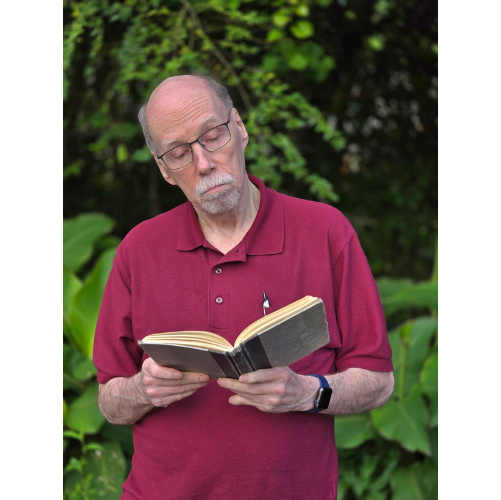
Jason Gordy Walker is a poet, writer, and translator who lives in Alabama. His reviews and interviews have appeared or are forthcoming in Asymptote, Birmingham Poetry Review, Poetry Northwest, and elsewhere. He has received support from the New York State Summer Writers Institute, Newnan Art Rez, and other institutions, and holds an MFA from the University of Florida.



Leave A Comment
You must be logged in to post a comment.