
Where the Wildflowers Grow
By Terah Shelton Harris
Sourcebooks, 2026
Paperback
Genre: Fiction
Reviewed by: Dr. Charlotte C. Teague
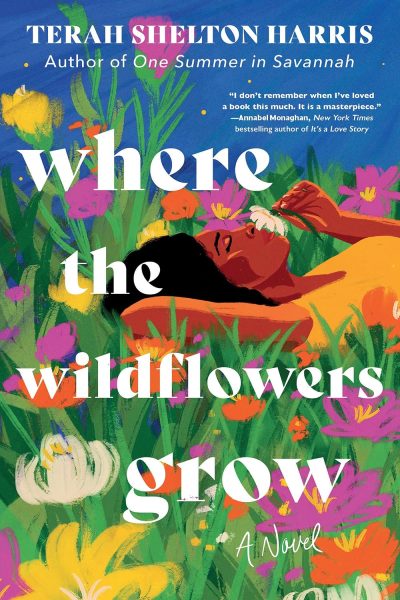
“It’s easy when it’s good, but what about when it ain’t?” These lyrics from Inge Rose’s new song, “Love Me When It’s Hard,” capture the emotional heartbeat of Terah Shelton Harris’s newest novel, Where the Wildflowers Grow. Harris’s third novel takes readers on an unexpected journey through pain, trauma, forgiveness, and love, carried almost magically on a path lined with Alabama wildflowers. Through beautiful and deeply evocative prose, Harris paints a portrait of life when money is scarce, smiles are few, and the sun seems reluctant to shine. She reminds us that memories often “enter without knocking.” Leandra (Leigh) Wildes, the novel’s imperfect protagonist and narrator, invites readers into her fractured world, where truth and memory blur along the familiar yet complicated lines of the rural South. Haunted by memories of her Mama, Daddy, her sister Lila, Deacon Ridley, and the painful secrets of her tragic past, Leandra gradually discovers that healing often arrives through the unexpected gifts of friendship, love, and survival. It is this journey from brokenness to restoration that gives the novel its quiet power and enduring emotional resonance.
This compelling work of Southern fiction derives much of its strength from Harris’s rich use of Alabama’s local color, customs, and cultural traditions. Alabama is far more than a backdrop; it is a living, breathing presence that shapes the identities, relationships, and choices of every character. Harris demonstrates an intimate understanding of the state’s cultural, historical, and emotional landscapes, grounding her narrative firmly in place while exploring universal themes of family, memory, belonging, forgiveness, and self-discovery.
Her Alabama is stitched together through the celebrated quilting tradition of Gee’s Bend, the comfort of fried chicken and apple pie, the folklore of moonshine, the anxiety of tornado season, ferry crossings, beetle bugs, Alabama football, Nick Saban, and even the neighborhood Dollar General—the kind of place where everybody knows your story, whether you want them to or not. These familiar cultural touchstones create an authenticity that resonates well beyond the state’s borders.
One of the novel’s most remarkable achievements is its nuanced portrayal of rural Alabama life. Harris captures the rhythm of small-town existence with authenticity and grace, revealing how community functions simultaneously as refuge, witness, and watchful observer. Hospitality exists alongside quiet judgment. The persistence of local history, the strength of community networks, and the weight of generational expectations shape both the novel’s atmosphere and its characters’ decisions. Readers familiar with Wilcox County and Camden, Alabama, will recognize the subtle details that define life in this region—the significance of family ties, the centrality of community relationships, and the often-unspoken social codes that govern everyday life.
In the finest tradition of Southern local color writing, Harris also uses Alabama’s physical landscape to illuminate both character and theme. Jackson, Luke, and Walt embody different expressions of Southern authenticity, each revealing the complexities of love, loyalty, and redemption. The title itself, Where the Wildflowers Grow, evokes the beauty and resilience of the natural world. Throughout the novel, fields, dirt roads, family homes, and quiet landscapes become symbolic spaces where memory and identity converge.
Like Southern literary predecessors Zora Neale Hurston, Eudora Welty, and Harper Lee, Harris understands that landscape is never merely scenery. It is layered with cultural meaning, historical memory, and emotional inheritance. Her characters navigate family secrets, inherited wounds, and community expectations that reveal how history continues to shape personal identity. Alabama becomes more than a geographical setting; it emerges as a repository of collective memory where past and present exist side by side.
Particularly noteworthy is Harris’s portrayal of Black Southern life. Too often, literary representations of the South focus almost exclusively on suffering and oppression. While Where the Wildflowers Grow does not shy away from hardship, it offers a richer and more expansive vision of Black life—one rooted equally in resilience, joy, humor, friendship, and enduring love. Harris presents Alabama as a place where Black families preserve traditions, honor ancestral histories, build meaningful communities, and create chosen families that are just as significant as biological ones. In doing so, she contributes to a contemporary reimagining of Southern literature that centers Black experiences without reducing them to a single narrative of struggle.
From a scholarly perspective, Where the Wildflowers Grow occupies an important place in contemporary Southern literature because it successfully bridges the conventions of traditional local color writing with modern questions of identity, mobility, memory, and belonging. Harris reminds readers that place continues to shape human experience, even in an increasingly interconnected world. Her Alabama—and the people who inhabit it—are neither romanticized nor condemned. Instead, they are presented with honesty and compassion as individuals negotiating the intersections of history, culture, family, and personal transformation.
Ultimately, Where the Wildflowers Grow is a beautifully crafted and emotionally resonant novel that makes Alabama feel tangible, intimate, and profoundly alive. Through its richly developed characters, evocative landscapes, and deep engagement with cultural memory, Harris has written a story that is unmistakably Southern while speaking to universal questions of family, identity, forgiveness, and love. In doing so, she not only honors the enduring tradition of Southern literature but also expands it, offering readers a portrait of Alabama that is authentic, compassionate, and unforgettable.
Dr. Charlotte C. Teague is associate professor and chairperson of the Department of English and Modern Languages at Alabama Agricultural and Mechanical University (AAMU) where she specializes in professional writing (creative, media, and technical), Black women writers, and protest literature.


Leave A Comment
You must be logged in to post a comment.